
The winners of the 2025 Brick in Architecture Awards have recently been announced. A total of 42 projects worldwide received awards in 2025.
ARTS Group Co., Ltd. is awarded the Silver Prize in the International Project category for its Zhang Jian Entrepreneur Academy project.
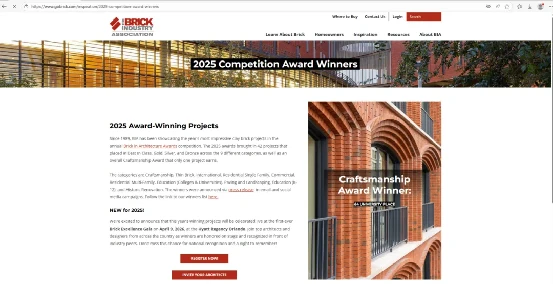
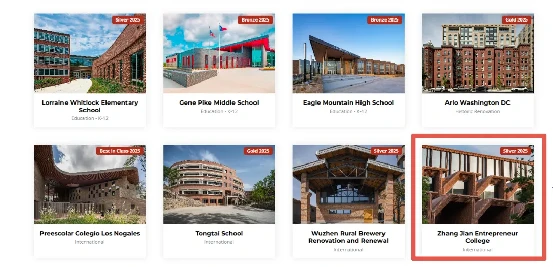
△ Screenshot of the winning project from official website

Hosted annually by the Brick Industry Association (BIA) since 1989, the Brick in Architecture Awards is America's most prestigious brick-architecture competition. It promotes and recognizes innovative, distinctive and compelling designs that use clay brick as a primary building material, raising public appreciation for creative clay-brick applications. It has grown into the most authoritative and pre-eminent award for clay-brick architecture in the United States. In recent years, outstanding works by Chinese architects have earned repeated honours. Examples include the Mazongshan Visitor Center (Gold Award, International Project) and the "Hui Space"-Xi Wusutu Village Community Centre (Silver Award, International Project), both designed by Inner Mongolia University of Technology Design Institute and awarded in 2024.
Located in Nantong, China, Zhang Jian Entrepreneur Academy is a cultural campus named after Zhang Jian, a modern-era national industrialist and educator. It aims to cultivate new-generation entrepreneurs with a strong sense of national responsibility and innovative spirit. Integrating Zhang Jian's spirit into a contemporary campus forms the core design starting-point. Rooted in cultural sentiment and spiritual essence, the design team employs master-planning, scene reconstruction, mixed-use programming and place-making to explore contemporary interpretations and spatial continuity of historical context, delivering a learning-and-exchange campus rooted in tradition yet oriented toward the future.
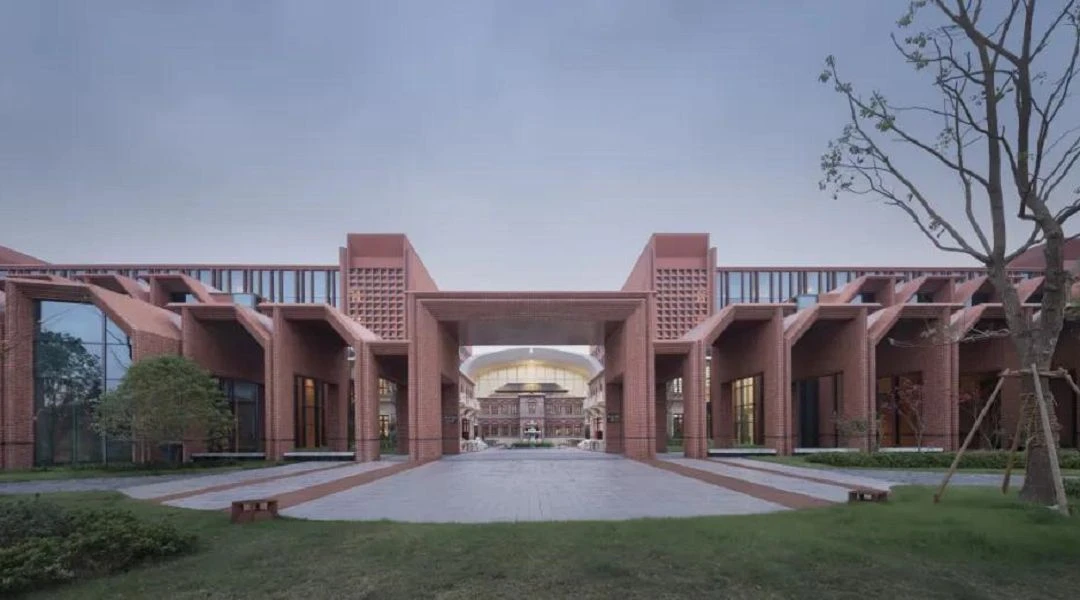
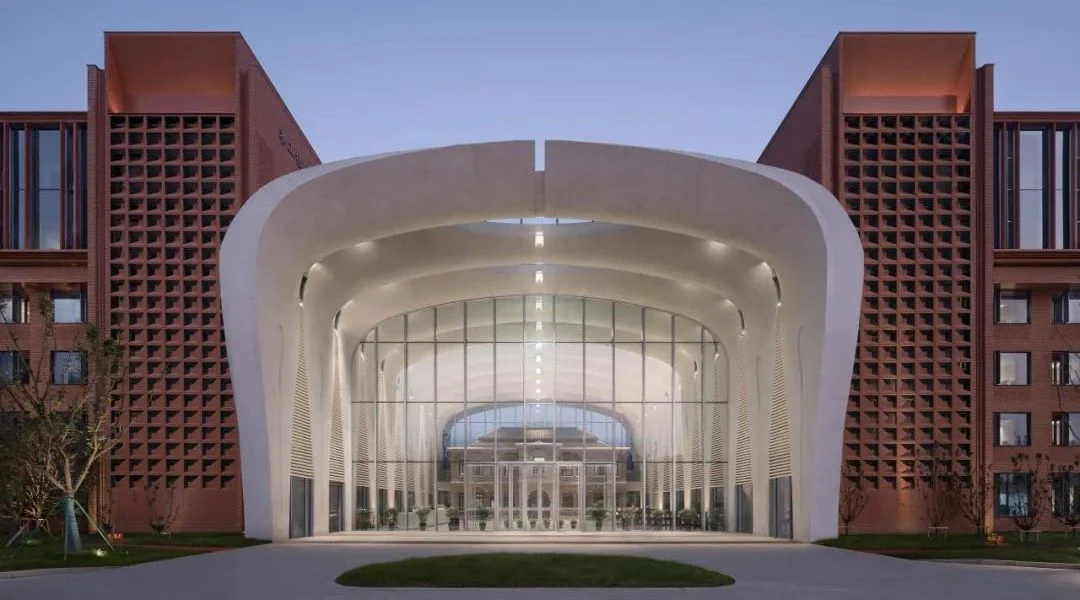
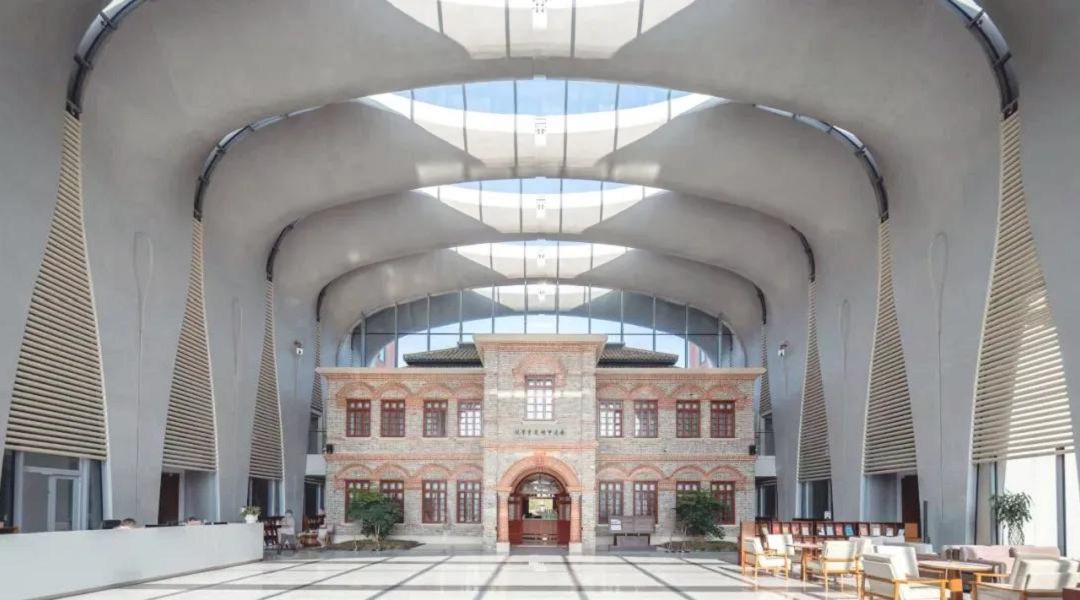
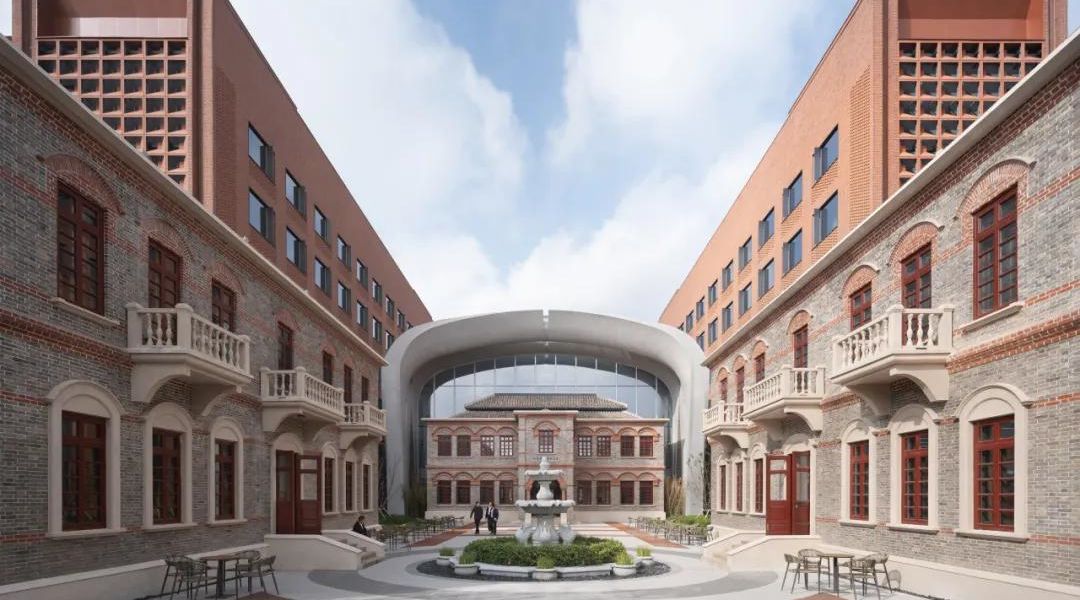
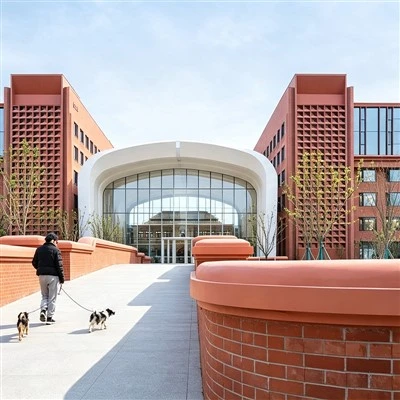
Campus spaces unfold along a central axis. At the heart of this axis, Nantong First Commercial School and two other modern-historic buildings have been reconstructed. Enclosed by these three buildings lies a ceremonial small plaza, functioning as an outdoor salon for entrepreneurs to gather and exchange ideas. Through sun-dappled brick colonnades, the plaza harmonises with the tranquil lake view in the distance, allowing century-old cultural heritage to thrive, endure and evolve within this modern campus.
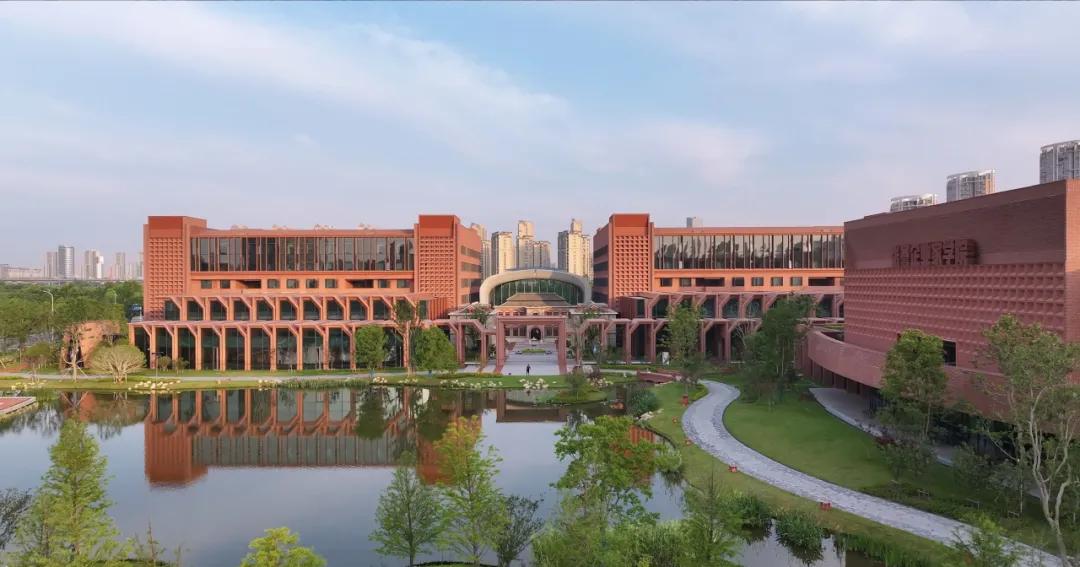
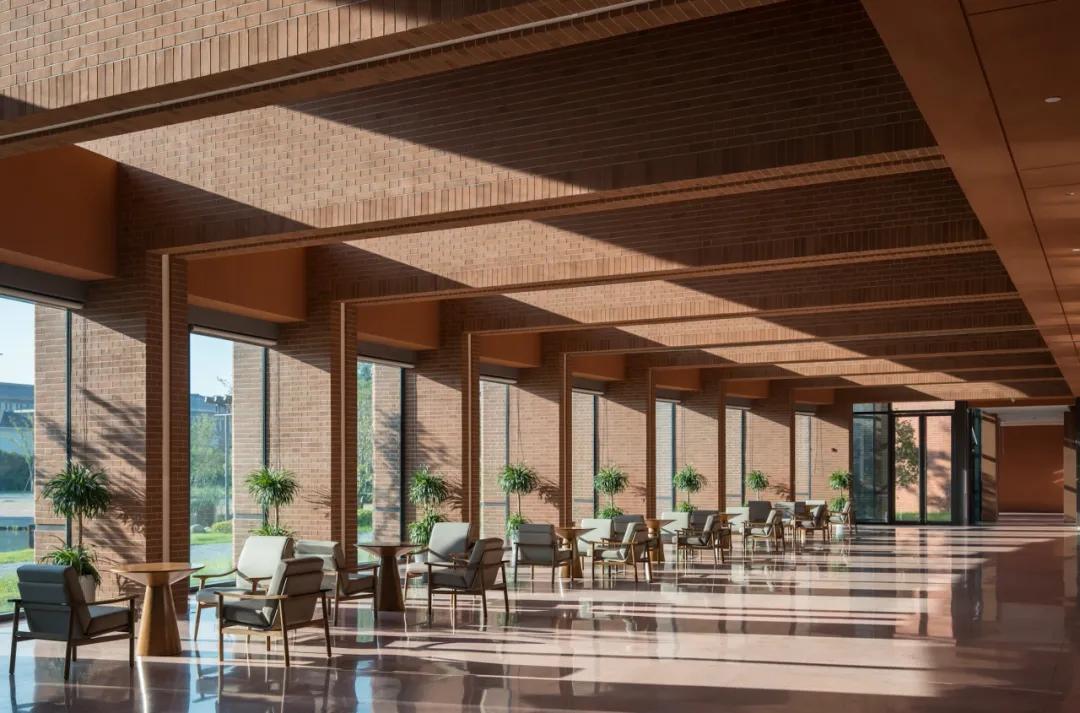
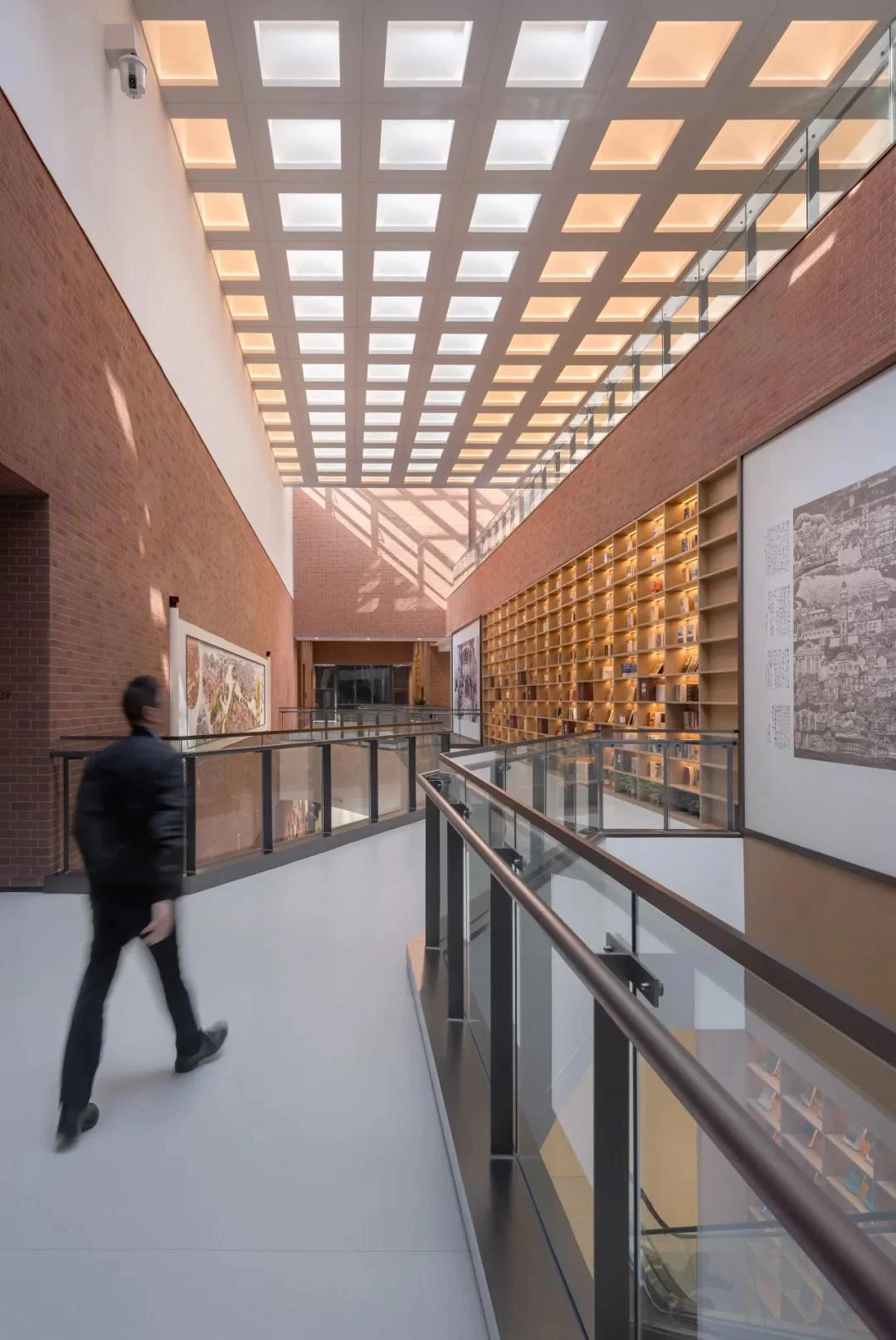
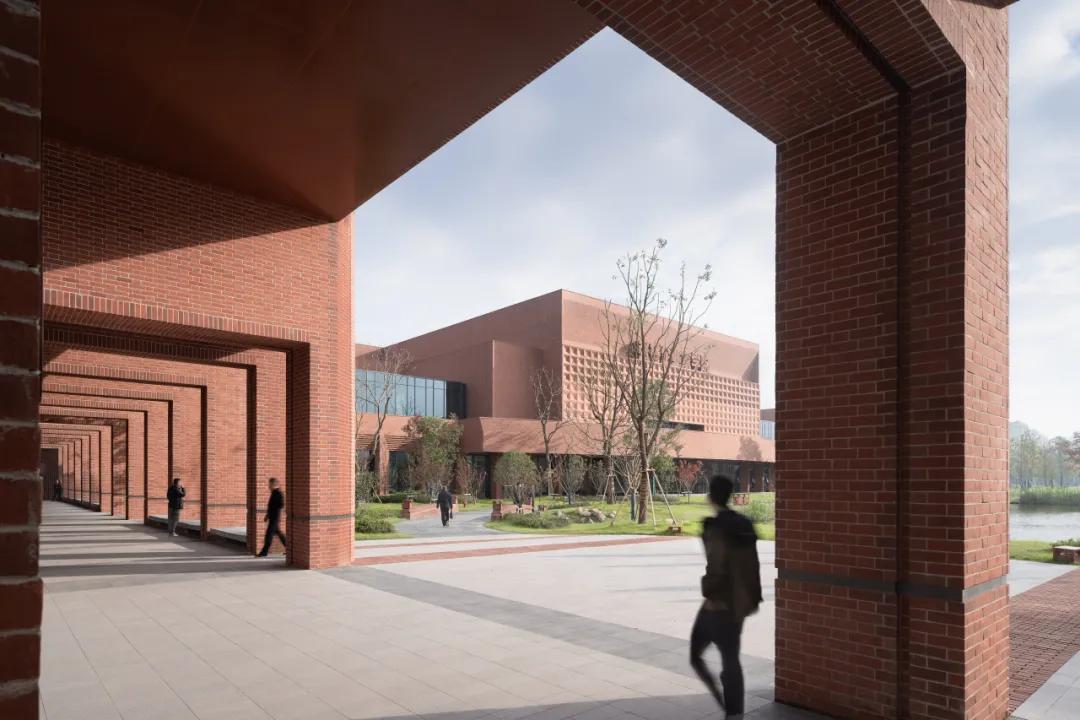
The academy adopts an "academy-style" clustered layout for teaching and living spaces. A water system acts as the primary spatial backbone, organically linking teaching buildings, dormitories, canteens, public communal zones and lakeside gardens. The waterside pedestrian network enables learning, communication and daily activities to unfold naturally through movement and pause. Spatially, it echoes Zhang Jian's educational philosophy of "integrating touring with learning".
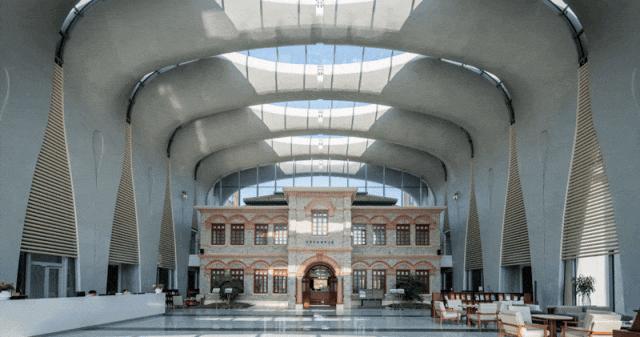
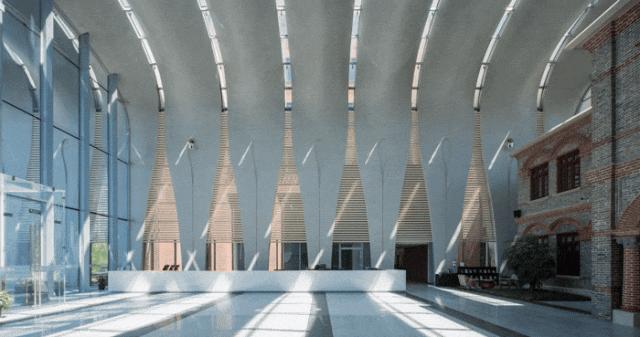
Cast-in-place concrete shaped after the soft petals of magnolia grandiflora - Nantong's city tree - runs through the entrance and main hall. Diffused sunlight generates shifting light-and-shadow effects, blending temporal perception within the interplay of contemporary space and historic character. Behind this poetic quality lies the design team's sophisticated capacity for digital design and spatial configuration.
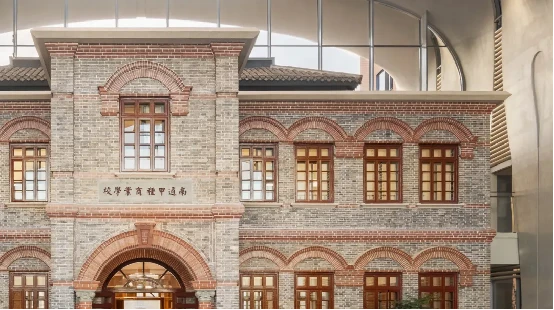
For brick-craft inheritance in the reconstructed Republican-era buildings along the central axis, multiple mock-ups were jointly conducted by the project team and local traditional construction crews to revive the "Yuanbao joint" brick pointing technique characteristic of certain historical periods in Nantong. This traditional detailing was successfully reproduced.
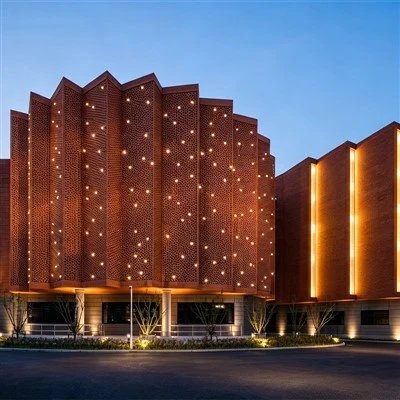
Newly-built teaching, dormitory and ancillary buildings feature terracotta brick as the dominant material complemented by transparent glass curtain walls, creating visual tension between solid mass and lightness. The design carries forward the historic vocabulary of Sino-Western industrial buildings from Zhang Jian's era such as Dasheng Cotton Mill, while expressing the openness and transparency of contemporary architecture. Terracotta bricks deliver durability, favourable thermal performance and recyclability. They satisfy sustainability requirements as well as educational-building demands for long-term stability and low maintenance. Approximately 70 % of the project's exterior facades use terracotta brick. Extensive adoption of local materials lowers maintenance expenditure and cuts carbon emissions from transportation, reconciling historical inheritance, contemporary construction and environmental accountability.
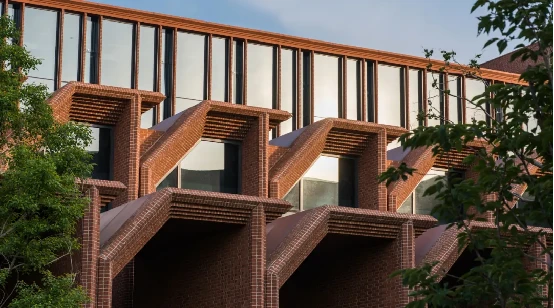
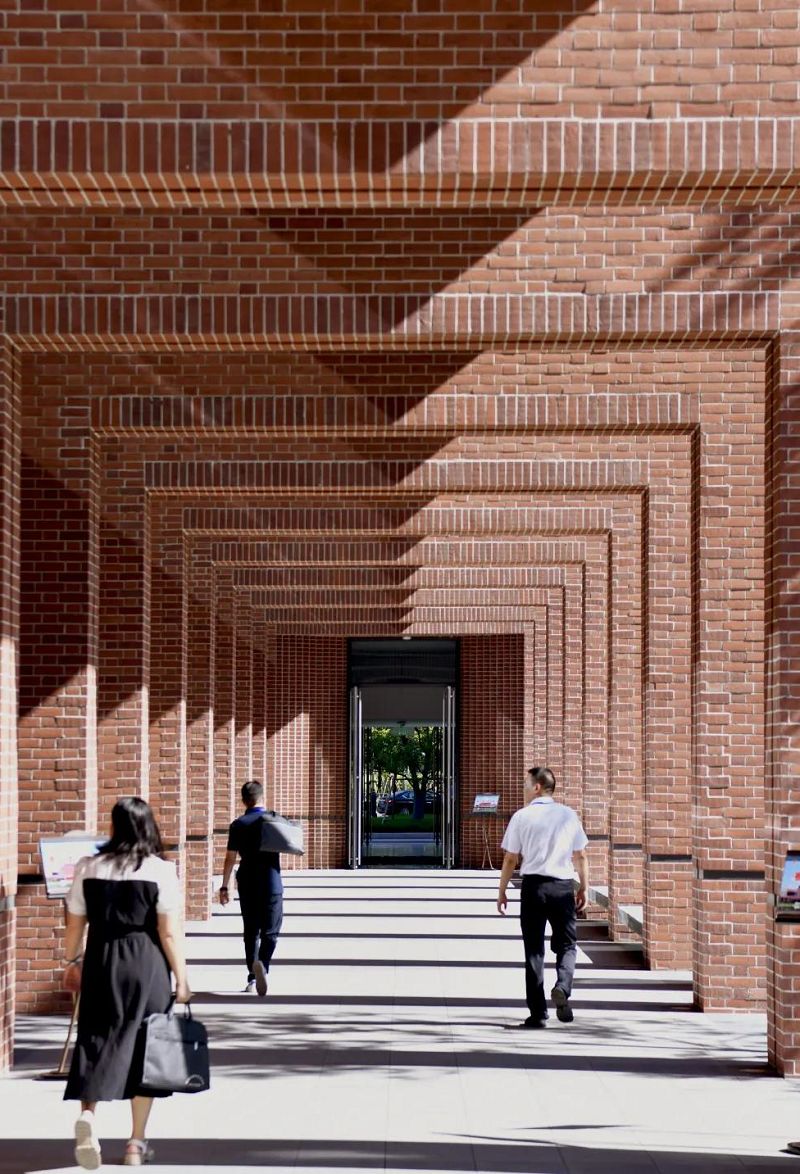
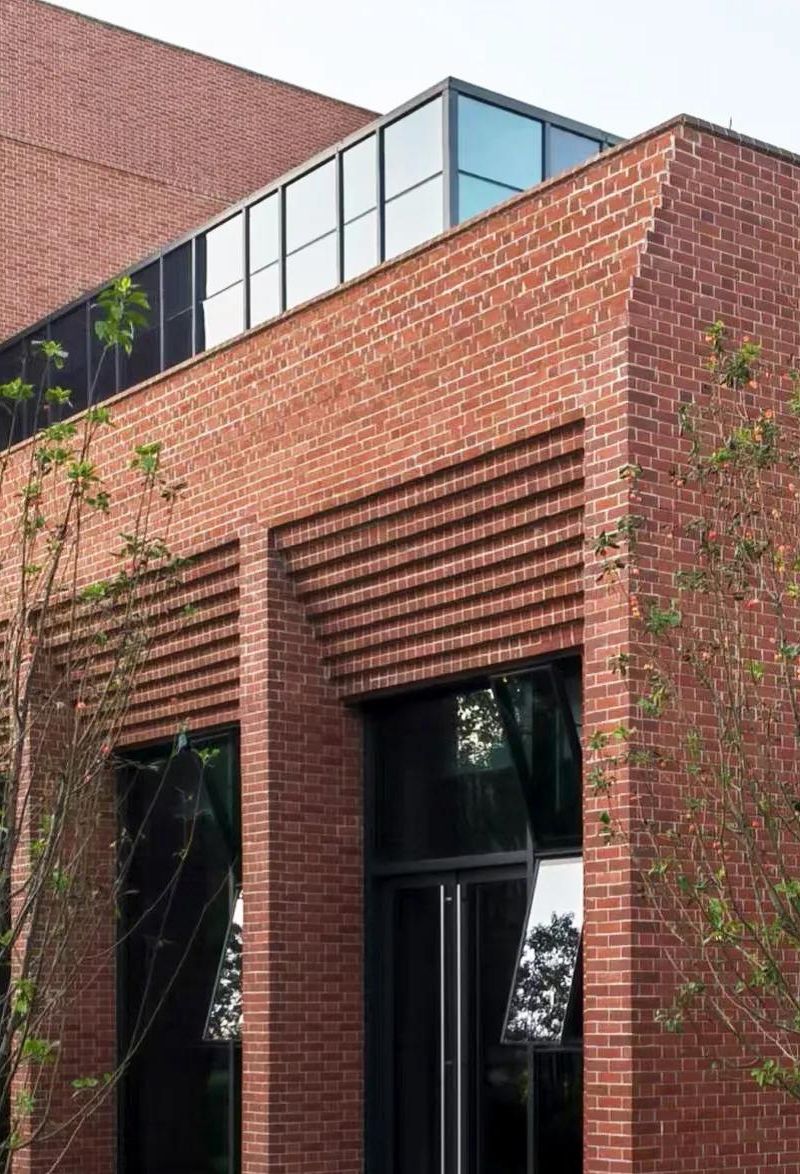
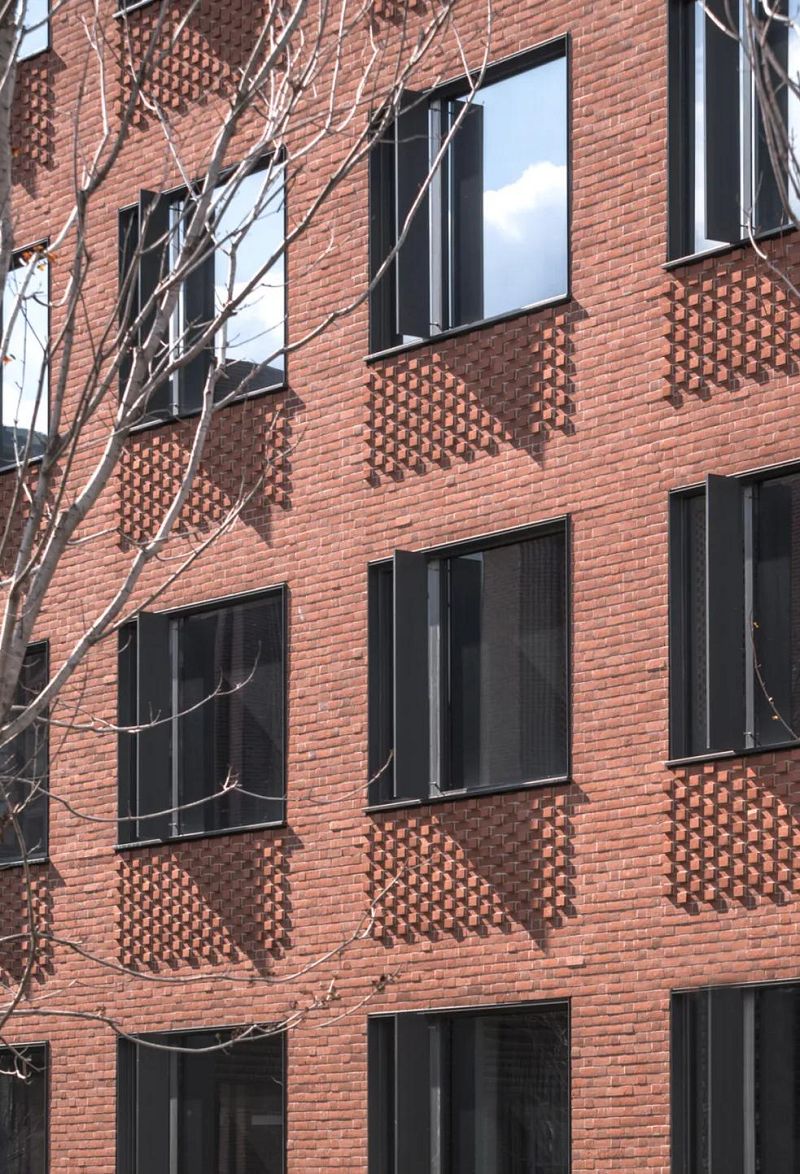
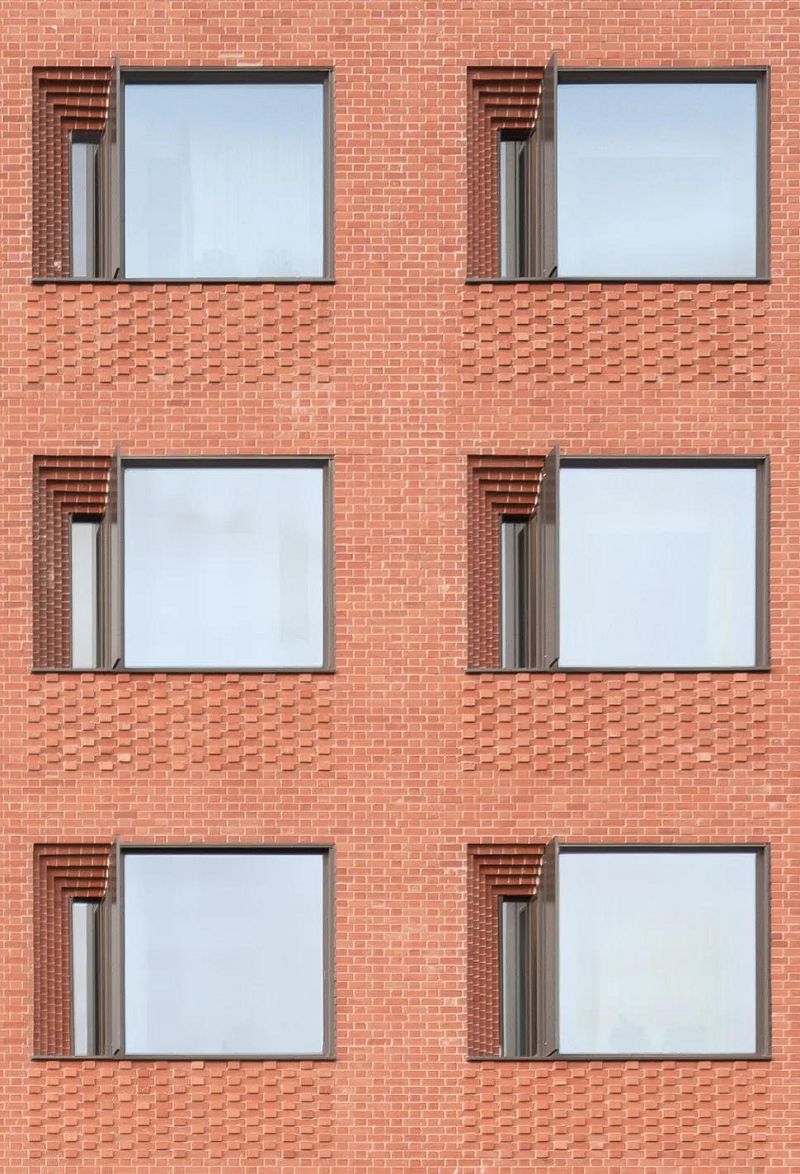
Building facades inherit Nantong's modern-era "plum-blossom bond" brick-laying method, supplemented by corbelled eaves, angled header bricks and deep-recessed mortar joints and other fine details, generating vivid textures transformed by light and shadow. Warm-toned kiln-fired bricks with rugged textures lend dynamic vitality to facades under varying lighting conditions. Bricks age gracefully over time with natural patination, reinforcing the building's symbiosis with nature. Leveraging the modular nature of bricks and introducing principles of modern cubist composition, facades achieve perforations, relief effects and rhythmic patterns with sculptural expressiveness.
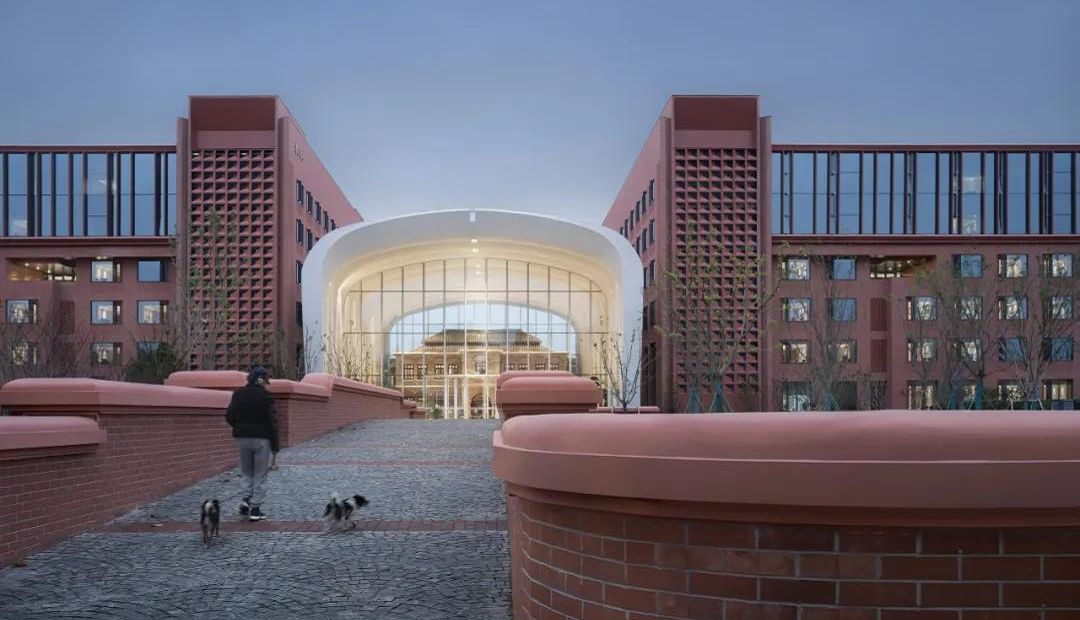
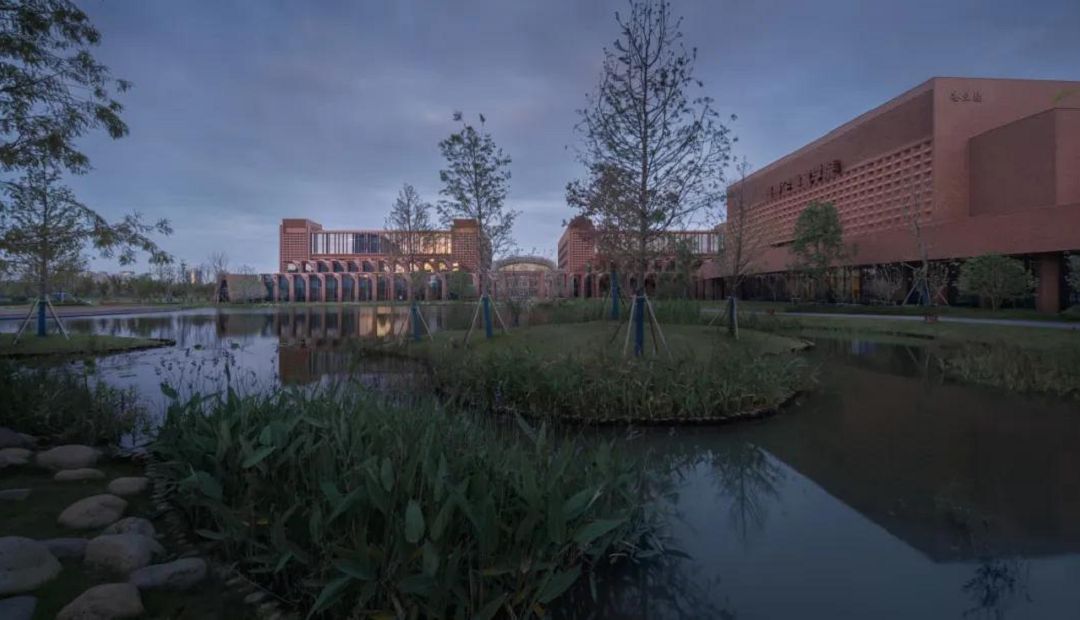
The project pursues aesthetic harmony between permanence and nature: the solid yet gentle brick material embodies educational ideals and humanistic care; open, communicative spaces foster cohesion and growth within a learning community. Using brick as its core medium, the academy synthesises historical spirit, humanistic sentiment and educational innovation into a unified place-based experience. It serves as an important base for contemporary entrepreneurs to enhance political literacy and inherit the spirit of serving the nation.